Micah Woods is the CEO of PACE Turf, an information service delivering science-based solutions to turf management problems, customized for each member’s location. He is also the founder and Chief Scientist of the Asian Turfgrass Center (ATC), established in 2006, through which he provides turfgrass advisory and soil testing services to golf clubs and sports facilities around the world. Since 2009, he has been an Adjunct Professor in the Department of Plant Sciences at the University of Tennessee.
Micah keeps his eyes on the ground, studying turfgrass wherever he is in the world, and that practical grounding shows in writing praised for its accessible style. He is the author of more than two hundred articles in publications ranging from GOLF Magazine to Soil Science, along with books with intriguing titles like One Bucket at a Time and 芝草科学とグリーンキーピング: マイカの時間 The BOOK.
PhD in Horticulture, 2006
Cornell University
BSc in Horticulture, 1998
Oregon State University

Fertilizer is one of the most important tools in turfgrass management, and soil testing should help turf managers use it skillfully. The conventional soil test guidelines, however, have little connection to surface performance. They were developed decades ago from research on other crops grown in agricultural soils, they placed turfgrasses in high P and K requirement categories for economic rather than agronomic reasons, and they date from an era of much higher nitrogen rates. This article traces the author’s path from superintendent in Shanghai and Japan, through doctoral research on soil testing at Cornell, to the development of the minimum levels for sustainable nutrition (MLSN) with Larry Stowell and Wendy Gelernter beginning in 2011. MLSN guidelines were derived from Mehlich 3 soil test results of sand-based and other low-CEC soils with pH 5.5 to 8.5 that were all producing good turf. A probability distribution was fit to the data for each element, and the MLSN value was set at the level below which only 10% of those results fall, which builds in a safety buffer against deficiency. To use MLSN, a turf manager supplies enough of each element to keep the soil above its MLSN value, based on how much of that element the grass is expected to use, and then checks soil tests over the years to adjust rates up or down. This approach supplies all the nutrients the grass can use, avoids problems associated with overapplication (such as excess P favoring Poa annua invasion and excess K increasing snow mold and dollar spot), and keeps fertilizer decisions linked to surface performance.

This is a compilation of the best content from the MLSN newsletter. It’s all about this modern method for soil test interpretation for turfgrass—how it works, how MLSN was developed, answers to common questions, and some fun stories about this project.

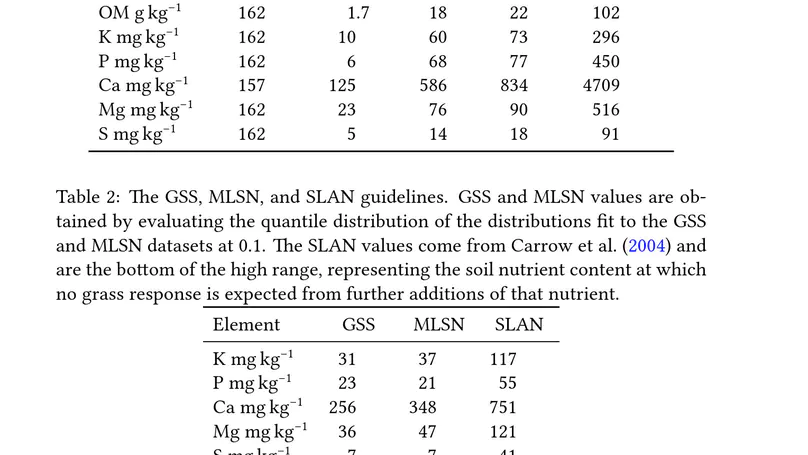
From 2013 to 2015, turfgrass managers from around the world were invited to submit soil samples from good-performing turf. A total of 162 samples, submitted from 10 countries and 42 unique sites across three continents, were analyzed using identical procedures at Brookside Laboratories (Ohio, USA). This global soil survey (GSS) was conducted to assess soil nutrient levels producing good turf, and to compare those results to conventional guidelines and to the minimum levels for sustainable nutrition (MLSN) data. Because each sample from the GSS was collected from good-performing turfgrass, the results represent a distribution of soil nutrient levels that can produce good turf. The pH of these samples ranged from 4.6 to 8.2 with a median of 6.5. Soil organic matter by mass loss on ignition at 360 ◦C ranged from 1.7 g/kg to 102 g/kg with a median of 18 g/kg. Soil nutrients were extracted by Mehlich 3. Median values for K, P, Ca, Mg, and S respectively, were 60, 68, 586, 76 and 14 mg/kg. Additional tests for P were done by Olsen (median of 15 mg/kg) and Bray 2 (median of 90 mg/kg) extractions. The soil organic matter and nutrient content of these survey results can be represented as continuous data from lognormal distributions. Soil pH was best represented by a normal distribution. The distribution of soil test results from the GSS show similar properties compared to the MLSN data. The nutrient contents of the GSS samples are lower than the levels recommended by conventional guidelines used in turfgrass soil test interpretation.

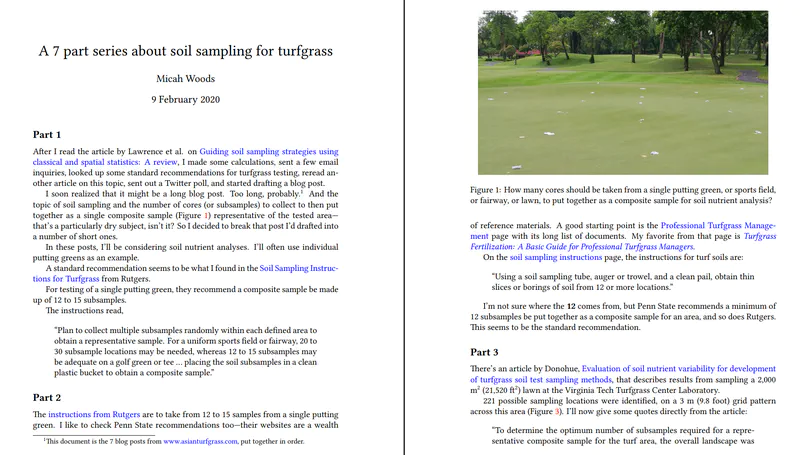
Standard recommendations from Rutgers and Penn State call for at least 12 cores to be combined into a composite soil sample for an area the size of a putting green, and Donohue’s intensive sampling of a 2,000 m² lawn in Virginia led to a recommendation of 20 subsamples per 1,000 to 2,000 m². A Twitter poll of 182 respondents found that most turfgrass managers collect 6 or more subsamples per green. A review by Lawrence et al., however, argues that soil samples should not be composited at all, because nutrient concentrations are often lognormally distributed and composites tend to overestimate them. This seven-part series, compiled from blog posts, reviews these recommendations and then tests them with data. Thirty cores were collected from a 1,092 m² double green in Bangkok and analyzed individually with Mehlich 3. Composite sampling was simulated by drawing 1 to 30 cores at random, 200 times each, and calculating the geometric mean. With 6 cores (about 0.55 cores per 100 m²), the simulated mean was within 10% of the true mean more than 90% of the time for P, K, and S, with fewer cores required for Ca and Mg. These results suggest that a few subsamples per green are probably enough, that the standard recommendation of 12 or more is excessive, and that testing individual cores may be a better approach than compositing, though variability on more greens should be checked.

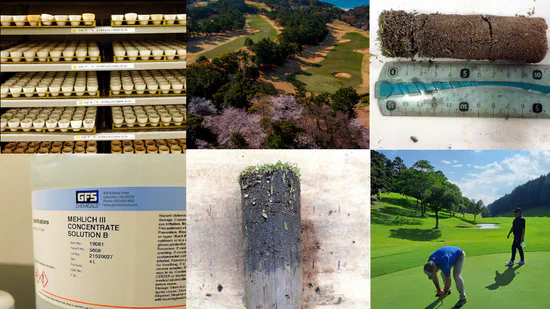
We provide soil testing services for clients around the world through Brookside Labs, and have an active research program in the area of turfgrass nutrition, soil and plant analysis, and sampling methods.
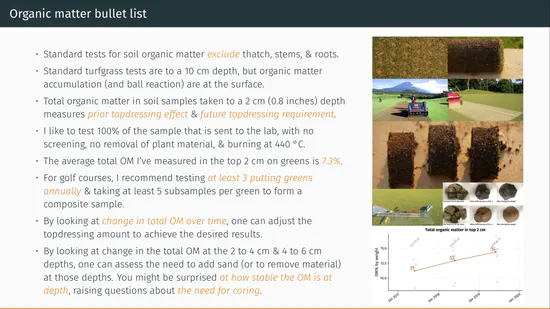
Measure exact topdressing effect, and requirement, by checking total organic material by depth.

My books about greenkeeping, turfgrass science, clipping volume, and MLSN.
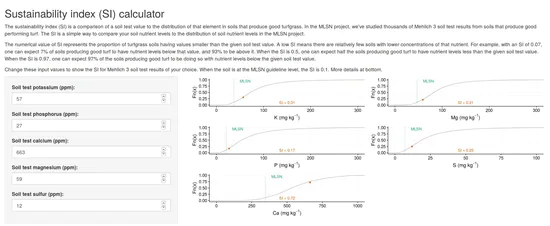
Web applications for R that make calculations or show data.

I’ve made some movies with my friends to explain how the grammar of greenkeeping works. You may enjoy watching.
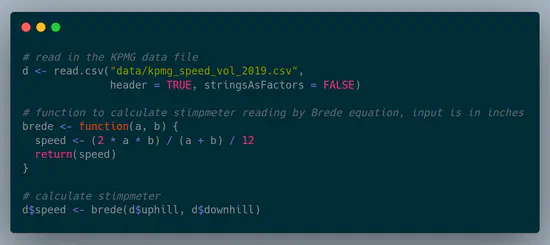
I’ve been doing some teaching, or demonstrating, how I use R software for data analysis in turf-related matters. See the full list of rturf posts. The initial project is about stimpmeter measurements and ClipVol.
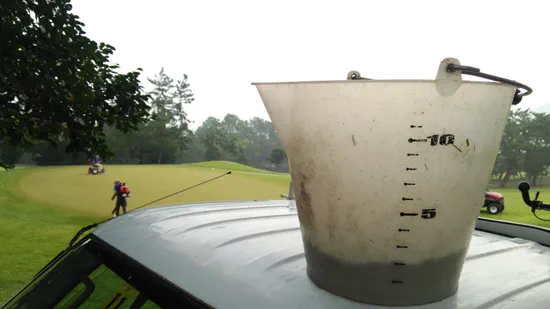
Measuring the growth rate by clipping volume. Really.
A project that investigated soil nutrient levels of good-performing turf all over the world.

Minimum levels for sustainable nutrition—MLSN—is a modern method for interpreting soil tests for turfgrass.